

The income statement should be used in tandem with the balance sheet and cash flow statement. With insights from all three of these financial reports, you can make informed decisions about how best to grow your business. Remember, income statements and balance sheets are tools you can use to measure your progress toward important business goals.
Fixed Asset Accounting Explained with Examples, Journal Entries, and More
Net income helps investors, analysts, and business owners evaluate a company’s financial health. It shows if the business is operating efficiently and generating value for shareholders. Assuming there are no dividends, the change in retained earnings between periods should equal the net earnings in those periods.
Are there different types of income statements?
Entities may even keep it simple and present only one line item for fixed assets equal to the net value of fixed assets at a point in time. The presentation of fixed assets should be the most appropriate representation of how the fixed assets are used at an organization and the nature of the organization’s business. Real estate or procurement teams should notify accounting when fixed assets are purchased. Management and accounting personnel that oversee financial reporting should set expectations for capitalization policies, determining an asset’s useful life, and the appropriate method of depreciation. Operations teams must notify accounting of any material changes to the asset such as damages or planned improvements.
- If the company has much higher free cash flows than it pays in dividends, then the company is likely to raise its dividend payments in the near future.
- The income statement can also help you make decisions about your spending and overall management of business operations.
- This expense is calculated using various methods (like straight-line, declining balance, or units of production) that spread the cost of the asset over the expected duration of its useful life.
- A higher ratio means fixed assets are being used more adequately than a lower ratio.
- It could potentially be useful for readers of financial statements in predicting if an organization will need to make a large capital outlay in the near future.
- Those included may need to have a specific value that can be assigned (such as the cost of purchasing that intellectual property from another company).
Profit or loss
Equip yourself with the right tools and resources from our shop, or explore our free accounting lessons. From Year 0 to Year 1, accounts receivable (A/R) increased by $10 million while accounts payable (A/P) increased by $5 million. The real cash outlay, Capex, already occurred and was recognized in the cash from investing section (CFI) in the period of occurrence. It’s important to understand how different ratios can be used to properly assess the operation of an organization from a cash management standpoint. The preparation and presentation of this information can become quite complicated.
Therefore, it is critical for the cost income statement definition of the items sold to be calculated accurately. The three core financial statements – the income statement, balance sheet, and cash flow statement – are closely intertwined under accrual accounting. The three financial statements are (1) the income statement, (2) the balance sheet, and (3) the cash flow statement.
- The Function of Expense method can also be referred to as the Cost of Sales method or the Multi-Step Income Statement.
- Analyzing your budget report and comparing it with actual results can also help you reallocate resources in areas that can improve your company’s operations and profitability.
- By analyzing your income statement, you can identify opportunities for increasing revenue and reducing expenses.
- Accountants do not record opportunity costs in the general ledger or report them on the income statement, but they are costs that should be considered when making decisions.
- By looking at the statement, you can see whether the company has enough cash flowing in to fund its operations, pay its debts, and return money to shareholders via dividends or stock buybacks.
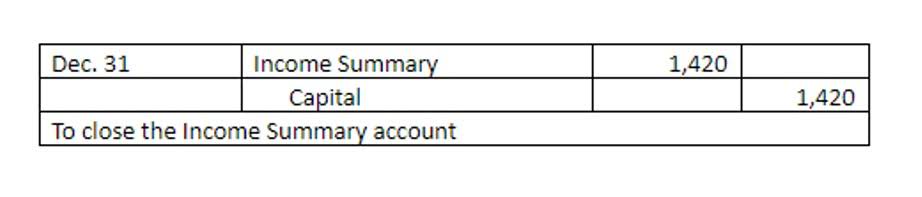
The net income (or net loss) determined by the income statement is reported in the statement of retained earnings. A single-step income statement is a simplified approach to viewing your net profit https://biobeachwear.com.br/24-best-accountants-in-indianapolis-in-for-2026/ or loss. Single-step income statements include revenue, gains, expenses, and losses, and they strictly show operating costs. Analyzing an income statement, also referred to as a profit and loss statement, is essential for understanding a company’s financial performance and making sound business decisions. The statement provides detailed information about revenues, costs, and expenses, allowing stakeholders to evaluate profitability and identify trends.
Determining the manufacturer’s cost of goods is complicated by the need to allocate the manufacturing overhead costs. If an error is made in counting or calculating the cost of the ending inventory, it is adjusting entries likely to cause the cost of sales, gross profit and net income to be incorrect. Example Corporation is engaged in the purchase and sale of goods (products, merchandise). It is also a regular U.S. corporation which means the income statement will include income tax expense. Notes to the financial statements refers the reader to important information that could not be communicated by the amounts shown on the face of the income statement.

Advanced Analysis Techniques for Income Statements

A simplified and less formal statement might only show cash in and cash out along with the beginning and ending cash for each period. The reinvestment ratio is calculated by dividing capital expenditures by depreciation. This ratio tells how much an organization is investing in fixed assets and if they are replacing depreciated assets. An organization with significant fixed assets or operations tied to fixed assets should expect a ratio greater than one. The cost of new fixed assets will likely increase due to normal inflation, while depreciation is calculated using historical costs.